
OPINION · SOCIAL NETWORK STRATEGY
The greatest labor market opportunity is closer than many organizations think.
Why social networks are becoming a strategic part of labor market development.
By Michael Boud - the Referral Specialist - July 14, 2026 - Opinion

"We have no
staff shortage.
We have a
network problem."
Michael Boud
Why social networks are becoming a strategic part of labor market development
The Dutch labor market is changing fundamentally. Yet many organizations still manage it as if hardly anything has changed. We talk a lot about tightness, an aging workforce, scarcity, and mismatch, but beneath these visible problems, I believe a deeper underlying development is at play. Labor markets are becoming less and less understandable as a collection of separate target groups and increasingly more as relational systems in which trust, information, and opportunities move through social networks.
Even now that the biggest peak seems to be behind us, the Dutch labor market remains structurally tight. In the first quarter of 2026, there were still 91 open vacancies for every hundred unemployed people. The question is therefore not only how organizations can recruit harder or smarter, but also which sources of reach, trust, and mobility they have so far underutilized.
In recent years, organizations have invested heavily in attracting new employees. Recruitment has become more professional, labor market communication more creative, employer branding stronger, and AI is now making its way into virtually every part of the recruitment process. These are valuable developments. At the same time, this creates an uncomfortable paradox: much AI and recruitment functionality is becoming available to an increasing number of organizations at a rapid pace, thereby losing its distinctive power relatively quickly.

AI makes everyone smarter.
But not distinctive.
AI tools are being integrated into ATSs, CRM systems, and recruitment marketing platforms. Sourcing techniques are increasingly supported by technology. Employer branding is becoming more data-driven. Candidate experience is no longer a niche, but a fixed component of professional recruitment. As a result, the profession is becoming more professional, but in some areas also more uniform. Organizations are increasingly using similar instruments to approach the same scarce labor market.
Precisely because of this, the question shifts as to where the next true distinctive capability emerges.
It is my conviction that this lies not only in better technology or greater visibility, but in something much harder to copy: the social infrastructure surrounding an organization. By social infrastructure, I mean the network of employees, former employees, candidates, alumni, customers, suppliers, educational institutions, volunteers, industry peers, regional partners, and informal relationships that already exists around every organization.
Virtually every organization already possesses such a network. Yet, it is rarely viewed as a single coherent whole or consciously developed. We are accustomed to thinking in terms of target groups and processes, whereas people develop much more through the relationships between people. That is precisely why it is interesting not only to look at networks, but especially at the role that trust plays within them.

A job vacancy reaches people.
Trust sets them in motion.
For many years the annual Edelman Trust Barometer has illustrated the growing significance of trust in the relationship between organisations and society. Its 2025 edition, based on research among tens of thousands of respondents across twenty-eight countries, once again demonstrates that trust is not a peripheral or intangible concept. It has become a determining factor in the way people evaluate institutions, leadership and organisations. Within organisations, trust rarely develops through formal communication alone. Whether a message is believed depends not only on its content, but also on who delivers it, the relationship with that person and the experiences that have shaped that relationship over time.
This matters because career decisions are seldom purely rational exercises. People rarely choose an employer solely because they encounter an attractive vacancy, an effective campaign or a compelling corporate narrative. Their decisions are influenced by the experiences of others, by reputation, by informal signals and, perhaps above all, by people whose judgement they trust. Trust, in other words, is not something organisations can simply communicate. It moves through relationships.
Research into labour mobility points in much the same direction. A large-scale collaboration between researchers at MIT, Harvard, Stanford and LinkedIn, published in Science, analysed experiments conducted across the professional networks of more than twenty million LinkedIn users. The study provided causal evidence that relatively weak social ties can play a decisive role in labour mobility. Their value lies not in close personal relationships but in their ability to connect individuals to different networks, fresh information and opportunities beyond their immediate circles.
This work builds upon the classic research of sociologist Mark Granovetter, who argued as early as 1973 that weaker social ties frequently act as bridges between otherwise disconnected groups. Ronald Burt later developed this line of thinking through his theory of structural holes, demonstrating how value emerges wherever people connect networks that would otherwise remain separate, thereby creating access to new information, influence and opportunities. More recent Dutch research appears to point in the same direction. A population-scale study published as a 2025 preprint suggests that long-term economic mobility is associated not merely with the size of an individual's network, but with the extent to which that network bridges different social and economic worlds. As the study has yet to undergo peer review, its conclusions should be interpreted with appropriate caution. Nevertheless, they fit strikingly well within a broader and increasingly consistent body of evidence: what matters is not simply the number of relationships people have, but the diversity of the worlds those relationships connect.
Taken together, these studies point to a pattern that extends well beyond recruitment itself. The Edelman Trust Barometer illustrates the centrality of trust. Granovetter and Burt explain how information and opportunity travel through the architecture of social networks. The work of MIT, Harvard, Stanford and LinkedIn demonstrates that these mechanisms have measurable consequences for labour mobility. None of these studies provides organisations with a ready-made blueprint, nor should they be interpreted as doing so. Collectively, however, they point towards an increasingly important conclusion: the quality and structure of relationships are becoming strategic assets in their own right.
They all suggest, from different disciplinary perspectives, the same underlying insight: people move through relationships.
Taken together, these studies point towards a pattern that extends well beyond recruitment. The Edelman Trust Barometer highlights the central role of trust. Granovetter and Burt explain how information and opportunity spread through network structures. Research conducted by MIT, Harvard, Stanford and LinkedIn demonstrates that these mechanisms also have measurable effects on labour mobility. None of these studies offers organisations a ready-made solution. They do, however, help explain why the quality and structure of relationships are becoming strategically more important. Although they approach the subject from different disciplines, they all point in the same direction: people move through relationships.
Perhaps we still organise labour markets according to organisational logic, while people experience them primarily through relationships. That may appear to be a subtle distinction, but I believe it lies at the heart of many of today's labour market challenges. Organisations are structured around functions, departments and target groups. People pay relatively little attention to those boundaries. They build their careers through relationships, through which trust, information, reputation and opportunity continually flow.

Organizations divide people into target groups.
The labor market connects them through relationships.
The same distinction is reflected in the way organisations organise themselves. HR focuses on employees. Recruitment focuses on candidates. Communications focuses on ambassadors. Marketing focuses on customers. Learning and Development focuses on internal mobility. Educational institutions focus on students. Industry associations focus on sector-wide talent inflows. Regional partnerships focus on labour market programmes.
Each of these perspectives is perfectly understandable from an organisational point of view. Yet they often describe different parts of the same underlying social system.
A candidate may become an employee tomorrow, an alumnus five years from now, and later a customer, supplier, volunteer, ambassador or returning employee. An employee may simultaneously be the parent of a student, a member of a sports club or professional association, a mentor to someone changing careers and part of several professional networks. A rejected candidate may still speak positively about an organisation. A former employee may later introduce new colleagues. A supplier may have access to networks the organisation itself would never reach.
Yet many organisations continue to manage these relationships as separate target groups through separate processes. In doing so, they overlook what those relationships collectively represent: a social ecosystem in which trust, information, reputation and opportunity are constantly in motion.
This may be one of the biggest blind spots in today's labour market strategies. We continue to invest heavily in reaching people more effectively, while paying far less attention to understanding and organising the relationships through which people actually move.
Seen from that perspective, advocacy also takes on a different meaning. It is not primarily a communication tool or a promotional tactic. Rather, it is a form of behaviour that exists within a social network. People become credible ambassadors only when they feel sufficiently connected to an organisation to share its reputation, their experiences and the opportunities they see with others. Within such a network, trust is not simply another message. It is what allows a message to travel.
That distinction matters. Reach can be bought, trust cannot. Trust is built through relationships. It has to be earned, nurtured and passed on. In a labour market where technology is becoming more widely available to every organisation, trust is becoming an increasingly valuable strategic asset.
None of this implies that social networks automatically produce positive outcomes. The same relationships that strengthen trust and create opportunities can also reinforce existing patterns, closed circles and inequality. For precisely that reason, a strategic approach to social networks requires more than activation alone. It also requires a conscious effort to broaden networks and create new connections.

Employee referrals are not the starting point. They are one of the most visible outcomes.
It is through this lens that I have gradually come to view referral recruitment differently. It is often described as a channel, a campaign or a programme through which employees introduce candidates from their own networks. That description is understandable, but it captures only part of what is really happening. Referral recruitment is visible, measurable and practical, yet it is ultimately one of the clearest manifestations of a much broader underlying mechanism.
That underlying mechanism is remarkably simple.
Someone is willing, however briefly, to place their personal credibility behind an organisation.
That is what makes referral recruitment so powerful, but also so fragile. Employees do not share vacancies simply because an applicant tracking system includes a sharing button. They share opportunities because they feel connected to the organisation's purpose, because they trust it, because they genuinely believe someone in their own network would thrive there, and because the organisation has made doing so easy, natural and psychologically safe.
Seen in this light, referral recruitment is not the starting point but one of the most visible outcomes of a well-developed social network around an organisation. The same can be said of alumni engagement, employee advocacy, talent communities, candidate experience, regional labour market initiatives, and partnerships with educational institutions or industry bodies. They may appear to be distinct activities, yet they all reflect the same underlying question: how can an organisation organise its relationships in such a way that trust, information and opportunity are able to move more effectively?
I describe this broader perspective as Social Network Strategy.
By this I do not mean a new label for referral recruitment. Rather, I mean a broader way of thinking about workforce development through the lens of relationships, trust and social networks. Social Network Strategy is the deliberate process of understanding, expanding and activating the social infrastructure surrounding an organisation as a strategic component of its workforce development.
In practice, this involves three closely connected tasks. The first is to understand the existing network and identify the connections that are missing. The second is to broaden that network consciously rather than allowing it simply to reproduce itself. The third is to activate relationships in ways that are credible, meaningful and socially safe.
It begins with a different way of looking at organisations. Instead of asking only whom an organisation still hopes to reach, it also asks which relationships already exist, how those relationships influence trust, labour mobility and sustainable recruitment, and where entirely new relationships could be built. That requires insight into the networks already surrounding an organisation, an understanding of where important connections are absent, and careful consideration of where bridges between different communities might most usefully be built. It also requires organisations to ask how they can avoid reinforcing existing patterns when the greatest value may lie precisely in creating new connections.
That final question deserves particular attention. Social networks are not automatically inclusive, equitable or innovative. They can create opportunities, but they can also exclude. They can increase diversity, yet they can also reinforce homogeneity. A serious Social Network Strategy therefore requires more than activation alone. It must also include analysis. Who is already part of the network? Who is missing? Which groups rarely meet? Which connections should be created deliberately because they are unlikely to emerge on their own?
This is perhaps the most important distinction between Social Network Strategy and traditional referral recruitment. The objective is not simply to encourage more people to recommend candidates. It is to strengthen and broaden the network surrounding an organisation in a deliberate and strategic way.
The Labour Market Requires a Different Organising Logic
The greatest opportunity in today's labour market may indeed be much closer than many organisations realise. That does not mean it will be easy to unlock. Social networks require attention, ownership and deliberate organisation. They rarely fit neatly within organisational silos because they extend across functions, departments and formal boundaries.
This, I believe, is where the real governance challenge begins.
It begins with ownership. As long as recruitment, HR, communications, learning and development, and external partnerships continue to focus only on their own audiences or processes, the wider social network will remain fragmented. Social Network Strategy does not necessarily require another department. It does, however, require a shared organisational vision, clear ownership and deliberate decisions about which relationships an organisation wishes to maintain, broaden and activate. It also requires organisations to measure whether those networks are genuinely reaching new communities, supporting labour mobility and helping to break existing patterns of exclusion.
If labour markets are relational systems, organisations can no longer afford to organise them as though they consist of separate target groups and isolated recruitment channels. Workforce development becomes more than a responsibility for recruitment alone. It becomes a responsibility shared across the organisation and, increasingly, across the wider ecosystem of which that organisation forms part.
For employers, this means recognising that employees, former employees, candidates, partners and customers are more than distinct stakeholder groups. Together, they form part of a broader social infrastructure whose value extends far beyond recruitment alone. For industry associations, it means that attracting people to a sector depends not only on campaigns, but equally on the relationships that connect employers, educational institutions, skilled professionals, parents, alumni and regional partners. For HR leaders, it means acknowledging that retention, mobility and recruitment are far more closely connected than organisational structures often suggest. For boards and executive teams alike, it implies that an organisation's position in the labour market will increasingly depend on the quality of the relationships it cultivates around itself.
That calls for a different vocabulary and, ultimately, a different perspective. The conversation shifts from employer branding to trust; beyond recruitment marketing towards network development; beyond target groups towards ecosystems; beyond reach towards meaningful connection; and beyond recruitment towards sustainable workforce development.
None of this diminishes the importance of recruitment itself. On the contrary, effective recruitment remains essential. Yet recruitment alone cannot resolve what has become, at its core, a broader organisational and network challenge. In the years ahead, organisations are unlikely to distinguish themselves merely by how effectively they reach potential candidates. Their competitive advantage will increasingly lie in how well they understand, connect and sustain the social networks that already exist around them.
Perhaps, a few years from now, we will look back on this period and conclude that the most significant innovation in workforce development did not begin with artificial intelligence or ever more sophisticated recruitment technology. Perhaps it began with a different insight altogether: that people move, to a considerable extent, through relationships, and that trust largely determines whether those relationships are capable of carrying information, reputation and opportunity from one person to another.
If that insight is correct, then the greatest opportunity in today's labour market is not somewhere beyond the horizon. It already exists within the social infrastructure that surrounds almost every organisation, yet remarkably few organisations have learned to understand, organise and develop deliberately.
Perhaps Social Network Strategy is not ultimately a new answer to the labour market after all, but a new way of looking at it.
And perhaps that is where every meaningful transformation begins.

The Future of Labour Market Development Is Social Network Strategy
Author’s note: This opinion piece brings together academic insights from several disciplines. The studies cited support the developments described; their interpretation and the concept of Social Network Strategy are the author’s own.
Sources and literature consulted
-
Burt, R.S. (1992). Structural Holes: The Social Structure of Competition. Cambridge, MA: Harvard University Press.
-
Statistics Netherlands (CBS). (2026, 30 April). Fewer Job Vacancies in the First Quarter of 2026. Statistics Netherlands.
-
Coleman, J.S. (1988). Social Capital in the Creation of Human Capital. American Journal of Sociology, 94, S95–S120.
-
Edelman. (2025). 2025 Edelman Trust Barometer: Global Report. Edelman.
-
Granovetter, M.S. (1973). The Strength of Weak Ties. American Journal of Sociology, 78(6), 1360–1380.
-
Kazmina, Y., Heemskerk, E.M., Van der Kooij, E., Bokányi, E. & Takes, F.W. (2025). Can Social Capital Remedy Structural Inequality? Economic Mobility in a Longitudinal Population-Scale Social Network. arXiv:2508.05275. Preprint.
-
Rajkumar, K., Saint-Jacques, G., Bojinov, I., Brynjolfsson, E. & Aral, S. (2022). A Causal Test of the Strength of Weak Ties. Science, 377(6612), 1304–1310.
This opinion piece combines insights from academic research with more than twenty years of practical experience in recruitment, labour market development and referral recruitment. Any interpretations and conclusions are the author’s own.
ABOUT THE AUTHOR
Michael Boud
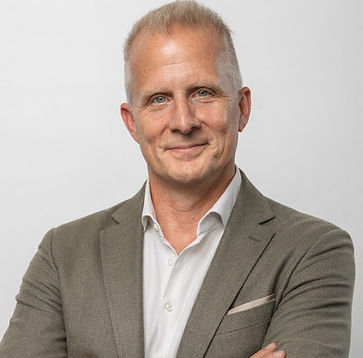
Michael Boud specialises in referral recruitment, ambassadorship and Social Network Strategy.
Based on his belief that many labour market challenges are also network challenges, he helps organisations make better use of their existing relationships and networks to expand their reach and attract talent.
Michael combines research insights with many years of practical experience.